

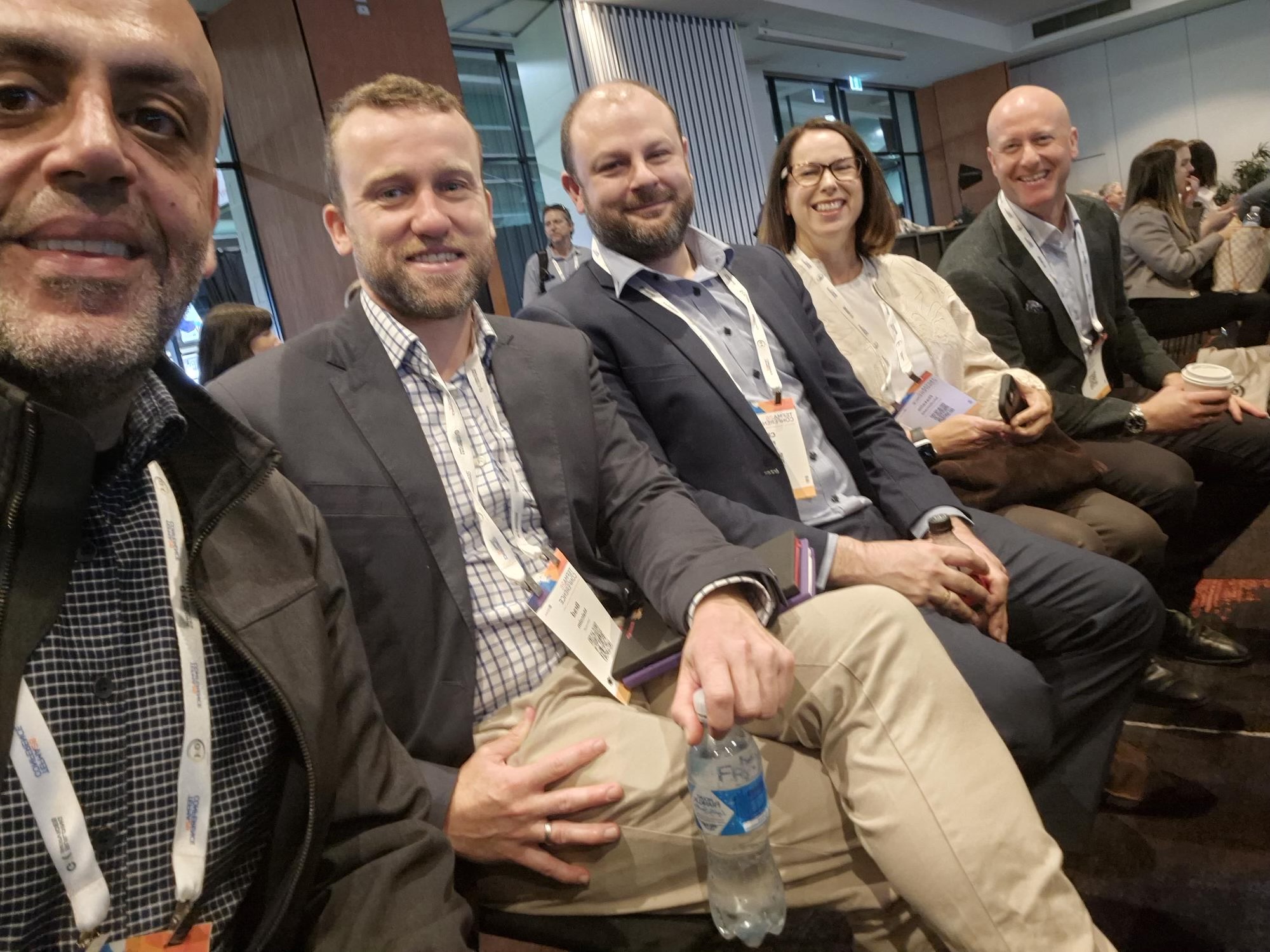
Representing Johnstaff were Bryn Hawken and Chris Fagri (WA), Natalie McDonald and Brad Malcolm (VIC), and Eddie Naffah (NSW), reflecting our national commitment to supporting education sector clients across Australia.
Aligned with this year's theme, dreaming tomorrow's campuses today through collaboration, knowledge and networking, the conference provided valuable insights into how universities and tertiary institutions are responding to changing student expectations, technological advancement and evolving learning environments.
One of the strongest themes throughout the conference was the renewed importance of the physical campus.
Universities reported increased student attendance on campus compared with the post-COVID years. However, attendance does not necessarily translate directly to classroom participation. Students are increasingly seeking opportunities for connection, collaboration and community, often choosing to engage with learning content in flexible ways while spending more time in shared campus environments.
This shift presents a significant opportunity for institutions to rethink how learning, teaching and social spaces work together to support student success.
The conversation has moved beyond classrooms alone, with a growing focus on creating vibrant campus ecosystems that encourage interaction, wellbeing and engagement throughout the student journey.
Universities are increasingly viewing their campuses as connected destinations, where learning, living, social interaction and community engagement intersect. The concept of the "campus as a city" highlights the importance of activating spaces beyond traditional teaching environments and creating destinations that attract students throughout the day.
The utilisation of informal learning spaces, communal environments and precinct-based planning featured prominently across multiple presentations and discussions.
Several institutions, including Swinburne University, La Trobe University, the University of Canberra and RMIT University, shared insights into their master planning strategies and long-term visions.
While each institution's priorities and challenges vary, a common thread was the need to balance ambitious future plans with evolving funding environments and changing student expectations. Master planning remains a critical tool for ensuring campuses can adapt over time, creating a framework for future investment and development when opportunities arise.
As teaching approaches continue to evolve, universities are progressively investing in more collaborative and flexible learning spaces.
Conference discussions reinforced the growing importance of environments that support active participation, technology-enabled learning and diverse teaching methods. As funding becomes available, institutions are continuing to transform traditional teaching spaces into environments that better facilitate collaboration and contemporary learning practices.
Another notable topic was the role of high-quality student accommodation in creating thriving campus communities.
Several presenters highlighted accommodation as more than simply a housing solution. Integrated student living environments are increasingly recognised as important drivers of campus activation, supporting community building, student wellbeing and stronger engagement with university life.
This perspective aligns closely with wider discussions throughout the conference around connection, belonging and creating destinations where students want to spend time.
Our Victorian team also had the opportunity to participate in a site visit to UniLodge student accommodation, providing valuable insight into the role residential environments play in supporting contemporary student experiences.
A standout keynote presentation from Mark McCrindle explored the impact of demographic shifts, changing workforce expectations and technological advancement on future generations of learners.
His insights reinforced the growing demand for education pathways that offer clear vocational outcomes, while highlighting how technology and the experiences of recent years continue to shape student priorities and expectations.
For Johnstaff, TEFMA 2026 reinforced the importance of future-focused planning, adaptable infrastructure and people-centred environments. As institutions continue to navigate changing educational, social and economic landscapes, creating places that foster connection, collaboration and belonging will remain central to the success of tomorrow's campuses.
We thank TEFMA, the presenters and our industry peers for another valuable conference and look forward to continuing the conversation with our clients and partners across the higher education sector.
Please enter your details below and the PDF will open in a new tab.